Docker container startup time is sabotaging your test feedback loop.
A few seconds here. A few seconds there. Suddenly nobody runs tests locally anymore because waiting breaks fast iteration.
And once engineers stop running tests often, test confidence quietly drops.
The uncomfortable truth?
In-memory system tests
For many system tests, spinning up the application DI container in-memory is simply faster:
- No Docker containers
- No orchestration overhead
- Just boot the app and test behavior directly
Yes — you lose perfect infrastructure-level isolation.
But you gain something valuable:
- ✅ Extremely fast isolated environments per test
- ✅ The ability to inspect internal state when needed
- ✅ Much tighter feedback loops
That’s exactly where Xcepto fits in.
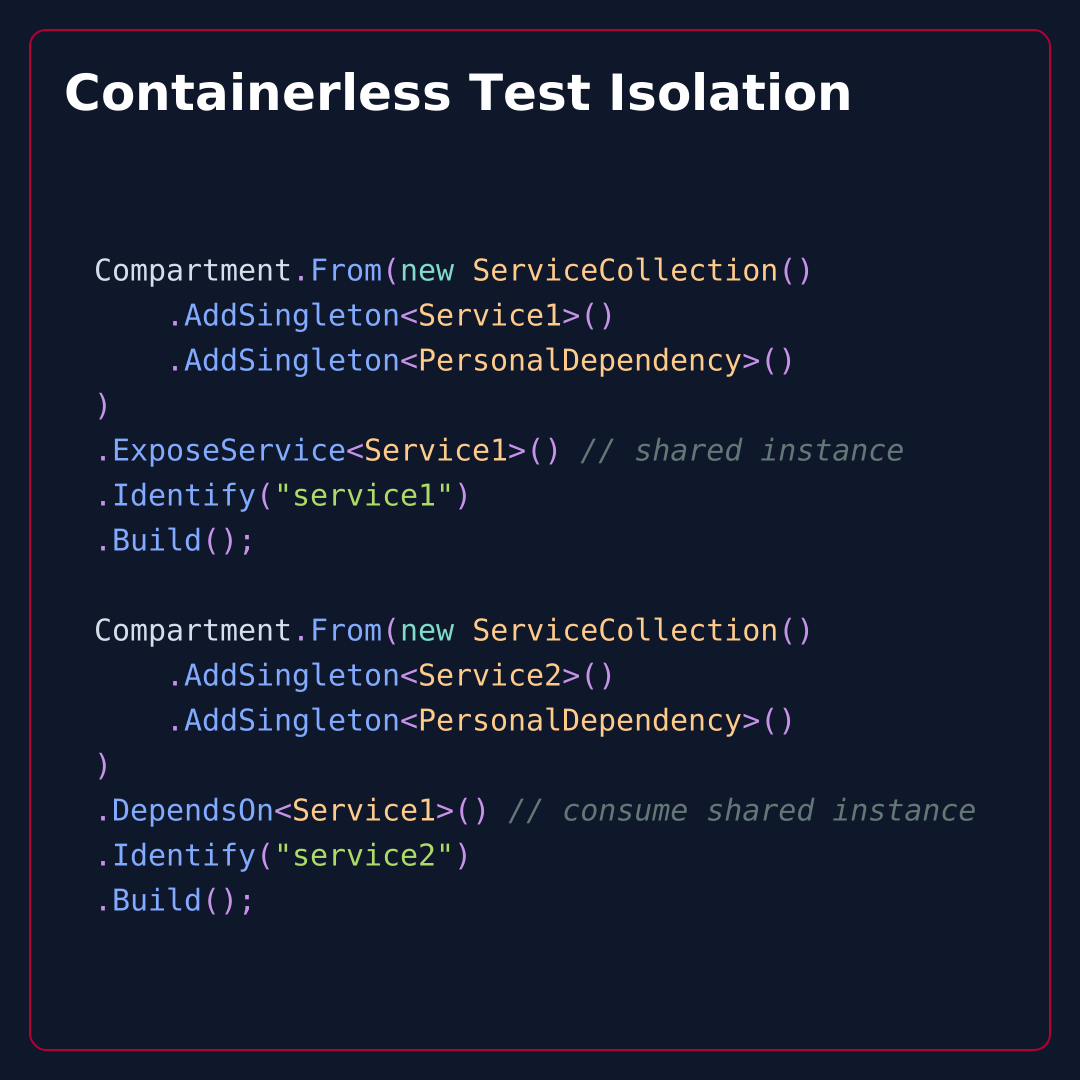
Xcepto allows running systems in-memory while preserving isolation through Compartments — an in-memory isolation model for separating components and dependencies when stronger boundaries are needed.
You still get system-level behavior testing.
Just without paying the "spin up containers for every test" tax.
And unlike Testcontainers, where creating a fresh isolated environment per test quickly becomes impractical, in-memory environments are cheap enough to make isolation fast again.
Fast tests get executed. Slow tests get skipped.
GitHub: Xcepto.NET